Created on Thursday, 26 March 2009 20:38
Hua Hu Ching reads not unlike the Art of War by Sun Tzu, but feels less Machiavellian and more Taoist.
Mandatory reading for the softer, gentler Warrior Class or Alpha Taoist.
Created on Thursday, 26 March 2009 20:38
Hua Hu Ching reads not unlike the Art of War by Sun Tzu, but feels less Machiavellian and more Taoist.
Mandatory reading for the softer, gentler Warrior Class or Alpha Taoist.
Created on Saturday, 21 March 2015 18:19
We all have a certain degree of admiration for those forward-thinkers who were ahead of their time, or for those free-spirited individuals who had the courage, the will and the foresight to  speak out their minds despite risking being labelled as non-conformists and cast to the outer fringes of society.
Well, truth be told, that is never a real threat for free thinkers. Actually, that is where they belong and makes them what they are. Free-thinkers breathe and thrive at the margins of society where structure and chaos cross at the borderline.
If you want to be a free thinker, embrace chaos, novelty, disruptive change and non-conformity. Free-thinkers live on the brink of social breakdown. They live on the edge, away from the anaesthesia of normalcy and institutionalised control.
They are not held captive by the rigid walls of the dominating worldview. They do not fear change, poverty or conspiracy. If you want to free your thinking and become an agent of change and novelty, there are a few things you need to recognise and understand.
1. Creativity is your natural birthright:
We stereotype creative thinkers as artists or bohemians who are different than the rest of us. Well, that is plainly false. We are all endowed with the gift of creativity. Education, or rather schooling, has successfully stripped most people from that natural disposition.
It has moulded them into mechanistic and reductionistic images of humanity – into cogs in the wheel. The schooling system is designed to make people think within the same parameters – those laid down by the dominating view of society and culture.
Students are discouraged to deviate and think freely outside of those parameters. They just have to follow curricula which channels them to examinations, higher institutions and eventually become part of the workforce.
Yet creative thinking is your natural birthright. They only taught you how to unlearn it without even noticing.
2. Group Thinking & Herd Morality are your mortal enemies:
Group thinking is the silent enemy of free-thinking. We unconsciously follow the rhythm of the crowd. When the crowd shouts, we feel compelled to shout. When the crowd panics, we panic. Emotions, sentiments and ideas can be very contagious.
So is thinking.
It’s quite easy to follow the line of thought of your peers and those in authority. Yet as we become sedated with group thinking, we lose the power to claim the authenticity of our own mind.
Besides thinking, we judge people and events as being right or wrong following the morality of the herd. We succumb to morally feel what the rest of the herd feels about an issue.
Morality is a highly debatable philosophical idea but the short end of it is that herd morality limits our potential to be free-minded, responsible individuals.
3. Perspective is key:
The free-thinker knows the power of perspective. Perspective changes everything. What we feel or think about something can dissolve or flip the other way round just by changing perspective. Even the strongest of views and beliefs can change when a newer perspective is reached.
What seems like loss can be seen as an opportunity just by changing your perspective. Adversity can turn into a learning opportunity; problems can turn into a solution; what is a failure from one perspective can be seen as a launching pad for success from another.
When you think freely you know that there is always more than one perspective on a given situation. You just need to view things from another angle. I like to use the internal courtyard analogy.
We are all windows in a circular building overlooking an internal courtyard. The perspective from my window is different than the others. Hence, if I want to have a better picture of the courtyard of life I need to look at it from other windows.
4. Knowledge is provisional:
Conservative, authoritarian, religious or institutional structures resist change forcefully because their worldview rests on the premise that their knowledge or beliefs are absolute. Even science can, did and does fall in this trap at times.
Yet the free-thinker is sure of only one thing – that knowledge is provisional. What we think we know today might be debunked or dramatically changed by what we know tomorrow.
Free-thinkers run away from individuals or organisations who claim to know something, or worse, know everything.
They are fully aware that we haven’t got the faintest clue yet, despite big leaps forward, about the world, life and the Universe at large.
5. Popping the time bubble:
Free-thinkers, especially visionaries and forward-thinkers have burst the time bubble. That means that they recognised that we view the world through the narrative of our time.
That narrative changes over decades and centuries yet we are closed in a time bubble so to speak that limits us to see the world only within the narrative of our own time.
The greatest innovators, futurists, visionaries and thinkers saw beyond that narrative. They burst the time bubble open and saw ahead of their time.
6. Defying institutional pressures:
Society has two major forces at play. One is a top-down control transmitted hierarchically through the institutions. The other is a force of change, novelty and innovation which is built bottom-up from individuals and slowly accepted and adopted by larger social structures.
One crazy innovative idea from a free-thinker on the fringes of society can be taken up by some influencers and spread virally through various forms of media until it becomes a norm. OK this is a simplistic overview but it’s enough to show the basic mechanics of social change.
Freethinkers are those individuals on the fringes of society cooking up shockingly new ideas. They refuse to succumb to institutional pressures of uniformity and control. The institutional top-down forces are there mainly to preserve their status-quo, the stability of the social system and its identity hence they resist novelty and change.
The power of the free-thinker on the other hand lies in constantly defying these institutional pressures to abide by the rules and accepted norms of society.
Edited from: humansarefree.com
Created on Tuesday, 12 August 2014 21:11
There are NO chosen people on the planet.
There are NO human beings more special than any other human being on the planet.
There is NO one true religion compared to all religions on the planet.
There is NO "one true church", that the "one true God", of the "Chosen People", is head of on the planet.
The reason the average world citizen is fearful, angry, and would just as soon rid themselves of their leaders is that their leaders have forgotten, or never knew, they weren't any more special than the people they are supposed to serve. Lutherans are not better than Catholics and South American Catholics aren't better Catholics than their North American counterparts. Presbyterians are not better than Baptists and Southern Baptists are no better than Northern Baptists and so on and so on and so on.
Exclusivism and just how to perpetuate that "specialness" is a hallmark mindset and goal of most religious faiths and "secret societies" like the Freemasons, Skull & Bones and others. It is a mind virus that seems to be rearing its rather ugly head again. One way, one belief, easily defined rights and wrongs, one law (i.e. one common mind virus) will provide all the comfort and security we need.
When fundamentalists who are infected with Exclusivism speak, the goal is to spread the virus and get others to agree and support it's propagation. Once you are in, everyone not in is out, and the virus then endeavors to become immune from attack through bluster, fear, shame and guilt.
Perpetuating more harm than good is what Exclusivists do best.
Religious organizations seldom complete the tasks they set out for themselves to do. To succeed is to render oneself obsolete and the goal is always to perpetuate the religion, organization, "specialness" and "chosen" status of the group, not end it. This is why no matter how wrong the "chosen" leaders are in fact, they can still explain it all quite well as a "misunderstanding" or "spiritually discerned," and keep the cash flowing in.
So how does Exclusivism work? What must happen for it to be successful?
First of all, it must do two things:
1. It must ensure it can take up a long term residence in the host (Membership or maybe Meme-bership). A meme is an idea that is passed on from one human generation to another. It's the cultural equivalent of a gene, the basic element of biological inheritance. The term was coined in 1976 by Richard Dawkins in his book The Selfish Gene.
2. It must bring about the proper conditions for spreading itself.
Once the above has been achieved the following happens:
1. Promise reward for the effort i.e. position, power, "inside knowledge" and (here's that word again) "specialness". It's better if the reward is "someday." In government, just pay them way too much for way too little.
2. Threaten punishment for failure to grow or pay, pray, stay and obey. This can take place almost any time now and/or in the future.
3. Convince them they are the "chosen", "exclusive" and "special people". Teach them that all others are false and the right way just happens to be where they are. Define the separation of church and state by saying, "It's a bridge and our God wants us to rule the world in his name".
4. Disable their ability to challenge or disbelieve the information given. Lower their immunity. Faith is superior to reason. "The wisdom of man is foolishness with God." In government, just have a folder on with enough info on their private lives to keep them in line.
5. Establish a library of "true literature" and "correct answers" for the faithful and discourage reading outside of this one true source, usually provided by the Chief Virus and his team of pathogens.
Once the parasite has been injected into the host it will need to propagate itself or the virus will die, so Exclusivists do the following:
1. Emotionally, spiritually, psychologically, or literally kill all immune persons. If you can't infect them, eliminate them. Religions just marginalize or disfellowship these types, but governments actually kill them.
2. Intimidate and discriminate against those you can't kill. Isolate them because such people, if not held in isolation, can pass on immunity and resistance to the virus. In religion, this is being disfellowshipped, demoted, censored, or made to bring the watermelon to the picnic. In government, rendition them extraordinarily, hide them away and waterboard them for the appropriate recantation.
3. Encourage true believers to breed faster than false ones. Evangelism is a great tool for this. Or have the Pope send mom a picture of himself for faithfully bringing a large number of small Catholics into the world. In government just ‘spread democracy’ no matter how restrictive it is.
4. Censor incoming information and remember to repeat "the wisdom of man is foolishness with God" often, along with a lot of other scriptures that promote blind obedience. In government, just control the media and set your sites on the Internet.
5. Be prepared to give out disinformation and spread lies about your rivals. Demonize them. And remember, the bigger the lies, the louder you shout them and the more seriously concerned you appear for the welfare of the members, the more successful you will be.
Exclusivism is an evil mindset promoting Us vs. Them, Me vs. You, Chosen vs. Unchosen, Christian vs. Pagan, True vs. False as defined by one government, organization or person over another and it is NEVER going to turn outright.
Usually, the only place where you will find confirmation that a particular group, government, church, guru, or other grand poobah is "more chosen" than all others is in their own literature, historic records or head.
There are NO chosen, special, more of God, people, nations or religions on this planet. As we each operate from our own level of consciousness we will all demonstrate unique talents and capabilities. The higher your level of consciousness the more creative, compassionate and loving, i.e. enlightened, your thoughts and actions will be. Remember that in the end, we are all a part of the same One thing, Prime Creator, All That Is. We're all made of stardust and we all have a limited time to behold the wonders of this universe.
Use that time wisely.
Don't let someone's misguided idea of "chosenness" either in religion, government or anywhere else, ruin your experience on this planet by disabling your ability to choose your own path and to think for yourself.
Edited from: OpEdNews.com
I am closing this article with one of my favorite excerpts from the book, that I have read and given to friends and strangers the most in my life –Conversations With God, Book 1 by Neale Donald Walsch
Everything your heart experiences about God tells you that God is good. Everything your teachers teach you about God tells you God is bad. Your heart tells you God is to be loved without fear. Your teachers tell you God is to be feared, for He is a vengeful God. You are to live in fear of God’s wrath, they say. You are to tremble in His presence.
Your whole life through you are to fear the judgment of the Lord. For the Lord is “just,” you are told. And God knows, you will be in trouble when you confront the terrible justice of the Lord. You are, therefore, to be “obedient” to God’s commands. Or else.
Above all, you are not to ask such logical questions as, “if God wanted strict obedience to His Laws, why did He create the possibility of those Laws being violated?” Ah, your teachers tell you—because God wanted you to have “free choice.” Yet what kind of choice is free when to choose one thing over the other brings condemnation? How is “free will” free when it is not your will, but someone else’s, which must be done? Those who teach you this would make a hypocrite of God.
You are told that God is forgiveness, and compassion—yet if you do not ask for this forgiveness in the “right way,” if you do not “come to God properly”, your plea will not be heard, your cry will go unheeded. Even this would not be so bad if there were only one proper way, but there are as many “proper ways” being taught as there are teachers to teach them. Most of you, therefore, spend the bulk of your adult life searching for the “right” way to worship, to obey, and to serve God.
The irony of all this is that I do not want your worship, I do not need your obedience, and it is not necessary for you to serve Me.
These behaviors are the behaviors historically demanded of their subjects by monarchs—usually egomaniacal, insecure, tyrannical monarchs at that. They’re not Godly demands in any sense—and it seems remarkable that the world hasn’t by now concluded that the demands are counterfeit, having nothing to do with the needs or desires of Deity.
Deity has no needs. All That Is is exactly that: All That Is. It therefore wants, or lacks, nothing — by definition. If you choose to believe in a God who somehow needs something—and has such hurt feelings if He doesn’t get it, that He punishes those from whom He expected to receive it—then you choose to believe in a God much smaller than I. You truly are Children of a Lesser God.
No, my children, please let Me assure you again, through this writing, that I am without needs. I require nothing.
Hold to your values so long as you experience that they serve you. Yet look to see whether the values you serve, with your thoughts, words, and actions, bring to the space of your experience the highest and best idea you ever had about you. Examine your values one by one. Hold them up to the light of public scrutiny. If you can tell the world who you are and what you believe without breaking stride or hesitating, you are happy with yourself.

Created on Saturday, 16 August 2014 19:22
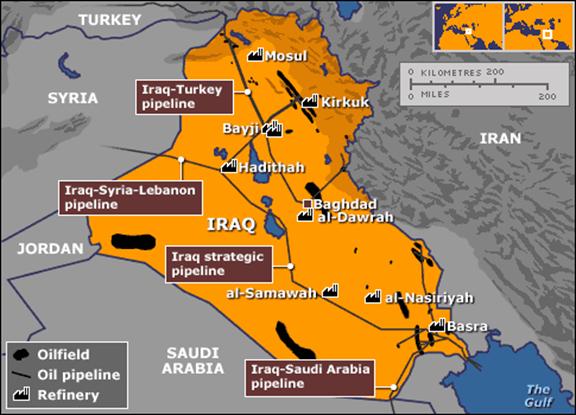
Following the bulk of western reporting on the Iraq crisis, you'd think the self-styled 'Islamic State of Iraq and Syria' (Isis) popped out of nowhere, took the west completely by surprise, and is now rampaging across the Middle East like some random weather event.
The reality is far more complex and less palatable. The meteoric rise of Isis is a predictable consequence of a longstanding US-led geostrategy in the Middle East that has seen tyrants and terrorists as tools to expedite access to regional oil and gas resources.
Since the second world war, as British historian Mark Curtis documented extensively in his seminal study, The Ambiguities of Power, US and UK goals in the Middle East have focused on oil. As a secret British document from 1958 explained:
"The major British and other western interests in the Persian Gulf [are] (a) to ensure free access for Britain and other Western countries to oil produced in States bordering the Gulf; (b) to ensure the continued availability of that oil on favourable terms and for surplus revenues of Kuwait; (c) to bar the spread of Communism and pseudo-Communism in the area and subsequently to defend the area against the brand of Arab nationalism."
While Saddam Hussein was fighting Iran abroad, not to mention gassing Kurds and Shi'ites at home using the vast quantities of chemical and biological weapons sold to him by the US, Britain, France, Germany, among others, he was our man: In 1988, when Saddam's forces were strafing Halabja with mustard gas and nerve toxins, massacring 5,000 civilians, US imports of Iraqi oil had rocketed to 126 million barrels – essentially one out of every four barrels of Iraqi oil exports. This was a special relationship. US oil companies received a discount of $1 per barrel below prices charged to European companies.
That special relationship only changed when Saddam's anti-Americanism got the better of him. At an Arab summit in February 1990, the Ba'athist leader declared: "If the Gulf people and the rest of the Arabs along with them fail to take heed, the Arab Gulf region will be ruled by American will." He complained that the US would dictate the production, distribution and price of oil, "all on the basis of a special outlook which has to do solely with US interests and in which no consideration is given to the interests of others."
So perhaps western officials thought they were being clever when they encouraged Kuwait to conduct what Henry Schuler – then head of the energy security programme at Washington DC's Center for Strategic and International Studies (CSIS) – described as "economic warfare" against Iraq.
Citing the king of Jordan among other high-level sources, the late investigative journalist Michael Emery reported at the time in Village Voice that Kuwait:
"… had enthusiastically participated in a behind-the-scenes economic campaign inspired by western intelligence agencies against Iraqi interests. The Kuwaities even went so far as to dump oil for less than the agreed upon OPEC price… which undercut the oil revenues essential to cash hungry Baghdad. The evidence shows that President George Bush, British prime minister Margaret Thatcher, Egyptian president Hosni Mubarak, and other Arab leaders secretly cooperated on a number of occasions, beginning August 1988, to deny Saddam Hussein the economic help he demanded for the reconstruction of his nation."
These covert efforts to quietly weaken Iraq's regional clout ended up provoking Saddam into invading Kuwait, prompting the 1991 Gulf War to re-assert OPEC's oil hegemony under western tutelage.
In the runup to the 2003 invasion, oil was again center stage. While the plans to invade, capture and revitalise Iraq's flagging oil industry with a view to open it up to foreign investors were explored meticulously by the Pentagon, US State Department and UK Foreign Office – there was little or no planning for humanitarian or social reconstruction.
Opening up Iraq's huge oil reserves would avert what one British diplomat at the Coalition Provisional Authority characterised as a potential "world shortage" of oil supply, stabilising global prices, and thereby holding off an energy crunch anticipated in 2001 by a study group commissioned by vice president Dick Cheney.
Simultaneously, influential neoconservative US officials saw an opportunity here to pursue hair-brained ambitions to re-engineer the region through the de facto ethno-sectarian partition of Iraq into three autonomous cantons: a vision that could not be achieved without considerable covert violence.
According to US private intelligence firm Stratfor, Cheney and deputy defense secretary Paul Wolfowitz co-authored the scheme, under which the central and largest part of Iraq populated mostly by Sunnis (including Baghdad) would join with Jordan; the Kurdish region of northern and northwestern Iraq, including Mosul and the vast Kirkuk oilfields, would become its own autonomous state; and the Shi'a region in southwestern Iraq, including Basra, would make up the third canton, or would join with Kuwait.
Stratfor warned presciently that: "The new government's attempts to establish control over all of Iraq may well lead to a civil war between Sunni, Shia and Kurdish ethnic groups… The fiercest fighting could be expected for control over the oil facilities" – exactly the scenario unfolding now. Fracturing the country along sectarian lines, however, "may give Washington several strategic advantages":
"After eliminating Iraq as a sovereign state, there would be no fear that one day an anti-American government would come to power in Baghdad, as the capital would be in Amman [Jordan]. Current and potential US geopolitical foes Iran, Saudi Arabia and Syria would be isolated from each other, with big chunks of land between them under control of the pro-US forces.
Equally important, Washington would be able to justify its long-term and heavy military presence in the region as necessary for the defense of a young new state asking for US protection – and to secure the stability of oil markets and supplies. That in turn would help the United States gain direct control of Iraqi oil and replace Saudi oil in case of conflict with Riyadh."
The Stratfor report noted that the plan was only one among several under consideration at the time, and not yet finalised.
In this context, contradictory US policies appear to make sense. In early 2005, Pakistani defence sources revealed that the Pentagon had "resolved to arm small militias backed by US troops and entrenched in the population," consisting of "former members of the Ba'ath Party" – linked up with al-Qaeda insurgents – to "head off" the threat of a "Shi'ite clergy-driven religious movement." Almost simultaneously, the Pentagon began preparing its 'Salvador option' to sponsor Shi'ite death squads to "target Sunni insurgents and their sympathisers."
The strategic thinking behind arming both sides was alluded to by one US Joint Special Operations University report which said: "US elite forces in Iraq turned to fostering infighting among their Iraqi adversaries on the tactical and operational level." This included disseminating and propagating al-Qaeda jihadi activities by "US psychological warfare (PSYOP) specialists" to fuel "factional fighting" and "to set insurgents battling insurgents."
This short-sighted divide-and-rule strategy went nowhere within Iraq beyond fueling sectarianism, but has played out across the region. As I previously wrote in the Guardian and elsewhere, both the Bush and Obama administration have – through Saudi Arabia, Qatar and other Gulf states – fostered extremist Sunni groups affiliated to al-Qaida across the Middle East to counter Iranian influence.
That has included extensive financing of jihadist groups in Syria to the tune of up to a billion dollars – a policy that began as early as 2009, and continued in the context of pipeline geopolitics. The US and UK had apparently decided that a proposed Iran-Iraq-Syria pipeline would undermine the interests of their favoured friends – Saudi Arabia, Qatar, Turkey and Jordan.
What is playing out now seems startlingly close to scenarios described in 2008 by a US Army-funded RAND Corp report on how to win 'the long war':
"The geographic area of proven oil reserves coincides with the power base of much of the Salafi-jihadist network…. For the foreseeable future, world oil production growth and total output will be dominated by Persian Gulf resources."
One strategy to protect US access to Gulf oil explored by the report was "Divide and Rule", which would involve "exploiting fault lines between the various Salafi-jihadist groups to turn them against each other and dissipate their energy on internal conflicts." The US could also concentrate "on shoring up the traditional Sunni regimes in Saudi Arabia, Egypt, and Pakistan as a way of containing Iranian power and influence in the Middle East and Persian Gulf."
This might end up empowering Islamist terrorists, the report recognised – but that could be a good thing as it "may actually reduce the al-Qaida threat to US interests in the short term" (never mind the long term) as they would target "Iranian interests throughout the Middle East and Persian Gulf while simultaneously cutting back on anti-American and anti-Western operations."
The potential results were anticipated. In February, director of the US Defense Intelligence Agency (DIA) Lt Gen Michael T Flynn testified in Congress that ISIS "probably will attempt to take territory in Iraq and Syria to exhibit its strength in 2014."
Now Iraqis are paying the price yet again for our ill-conceived imperial hubris, and the US is desperately considering an alliance with arch-enemy Iran to stave off Isis, whose bloody rampage across Iraq threatens to disrupt Iraqi oil production. The conflict has already triggered price spikes that could worsen if Isis expands its hold of key cities.
A new intervention to keep the lid on oil prices is clearly tempting for the US and UK governments, except this would merely strike at the head of the hydra – the symptom – not the root cause. And so far, self-serving wars for oil are precisely what got us here. The rise of Isis – a movement so ruthless even their parent network al-Qaeda disowned them – is blowback from the same brand of oil-addicted US-UK covert operations we have run for decades.
If we really wanted to shut down Isis and its ilk for good, we could start by dismantling and disentangling ourselves from the geopolitical and financial infrastructure of oil hegemony that incubates terror. In the current context, bombs promise nothing more than the road to escalation.
In Einstein's words: "The definition of insanity is doing the same thing over and over again and expecting different results."
Source: stopwar.org.uk