This book is written in such a way that even if it is the first time you have come across his type of alternative information, it fills you in on all that has come before. It's sometimes difficult to read because throughout the book Icke continues to challenge the very foundation of your belief systems. It's not hard to see once your eyes are opened, and the author opens your eyes to the possibilities; you only need to recognize that nothing is as it seems.
If you are very adamant about what you think you know then don't waste your time. However, if you are willing to explore new possibilities and you can see through the BS that the world has crammed down your throat, then you will enjoy this very much. This book is for the free thinker.
This book deals with a controversial topic, alternative human history, or rather the dark side of human history that has been hidden from the average person's world view. This is arguably one of the most fascinating fields of study, rivaled only by parapsychology.
Unfortunately, it is very difficult to find reliable sources on this subject, as many of them are based on 'channeled' information or baseless conjecture.
In The Gods of Eden, William Bramley backs up all of his arguments with reliable sources. Furthermore, his research is not tainted by personal attachment to any particular belief system. He does an excellent job of bringing many neglected and obscured topics to light, some of which will permanently change the way you view the world, its governments, and especially religion.
William Bramley is a historian in his own right. His work essentially follows a certain mystery cult throughout history, from ancient times to the present day, identifying its branches through their common symbols. He further explains the power that this group holds and its enormous influence throughout history on society and religion.
The Gods of Eden s a very solid primer on alternative human history, which will open up many doors of further research for the inclined reader. It also has the potential of liberating the average intelligent and open-minded individual, from the relentless clutches of our deceptively common paradigm.
In A Beginner's Guide to Constructing the Universe, author Michael Schneider takes the reader on a lavishly illustrated journey along the numbers one through ten. In his book, he explores the mathematical principles made visible in flowers, shells, crystals, plants, and the human body. This is a new view of mathematics, not the one learned at school, but a comprehensive guide to the patterns that recur through the universe and underlie human affairs.
In 1975, physicist Fritjof Capra wrote an unusual book about physics and Eastern mysticism titled "The Tao Physics". Though some of Mr. Capra's colleagues were offended that any physicist would compare the science of modern physics with the religious practices of Eastern mystics (primarily the beliefs & practices of Hinduism, Buddhism, and Taoism), the reality is that there are some very striking similarities between the intuitively Eastern mystical view of reality and the experimentally rational view of quantum theory.
Part of the reason for this is that both physicists and Eastern mystics find it very difficult to explain their observations in language (including the language of mathematics) because their experiences are not encountered in our every day, mechanistic macro world. Up until the time of Einstein, physicists were comfortable with explaining the world using Newton's mechanistic theories. However, Einstein realized that there was a fatal flaw with the Newtonian view which presumed that gravity is felt instantaneously regardless of distance. Also, Newton's law of gravity really didn't explain exactly what gravity is. With a stroke of insight, Einstein realized that nothing could travel faster than the speed of light, including gravity, and several years later was able to explain gravity as being the consequence of the curvature of four-dimensional space-time due to mass.
These discoveries threw the world of Newtonian physics upside-down, but as Einstein's theories demonstrated, the Newtonian view was still valid for objects whose speeds come nowhere near the speed of light. Hence, Newton's laws of motion and gravity were still valuable, but in actuality, are only good approximations that can be used to explain movement in our frame of reference.
Einstein, however, could not accept the views being developed by his contemporaries in the field of subatomic particles, because Einstein maintained that elegant simplicity and orderliness existed at all levels of the physical Universe. Niels Bohr and Werner Heisenberg, on the other hand, discovered that the subatomic world was anything but simple and orderly. Instead, they, and the physicists who followed them, discovered that the subatomic world is not comprised of hard, independent, and quantifiable particles, but of highly unpredictable and interconnected packets of energy. These packets manifest both as particles with mass and as waves of energy that can only be partially explained through the use of probabilities.
 sometimes difficult to read because throughout the book Icke continues to challenge the very foundation of your belief systems. It's not hard to see once your eyes are opened, and the author opens your eyes to the possibilities; you only need to recognize that nothing is as it seems.
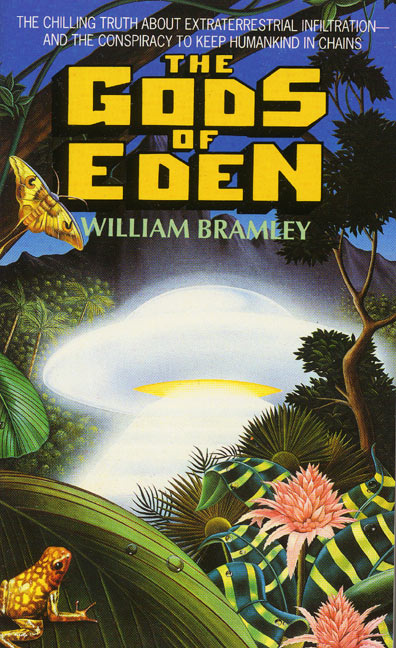 is arguably one of the most fascinating fields of study, rivaled only by parapsychology.
 In his book, he explores the mathematical principles made visible in flowers, shells, crystals, plants, and the human body. This is a new view of mathematics, not the one learned at school, but a comprehensive guide to the patterns that recur through the universe and underlie human affairs.
 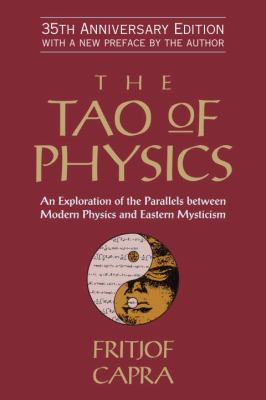 offended that any physicist would compare the science of modern physics with the religious practices of Eastern mystics (primarily the beliefs & practices of Hinduism, Buddhism, and Taoism), the reality is that there are some very striking similarities between the intuitively Eastern mystical view of reality and the experimentally rational view of quantum theory.